
Table of Contents
NeoPsych is a TMS practice in Glendale, CA, that submits hundreds of claims, prior authorizations, and quotes per year. There are many things involved with getting TMS treatment, so we happily guide patients through the process. We believe that being aware of the costs involved with treatment will improve outcomes. If you are near the Glendale area, or plan to visit the Glendale area, and have more questions, please contact a NeoPsych representative for more information.
The First Consideration of Insurance Coverage for TMS: The Prior Authorization.
Insurance is not an exciting topic, however, it is often necessary when discussing TMS. The cost of the service can be thousands of dollars. The average person will not have this money readily available in cash, so being able to understand how insurance works will be important if interested in starting a course of TMS at NeoPsych. Below is information that details TMS coverage via insurance. If interested in the clinical benefits of TMS, click this link to learn more.
What is Prior Authorization?
Prior authorization is permission from the insurance company to perform a service prior to performing the service. The insurance company evaluates on:
- Whether the treatment is medically necessary
- Whether it meets coverage guidelines
Examples of services that insurance companies often require prior authorization for:
- TMS therapy
- Ketamine or Spravato treatment
- Intensive outpatient programs (IOP)
- Certain psychiatric medications
- Advanced or expensive treatments
What Are the Specifics that TMS Prior Authorization Requires?
Insurance reimburses TMS based on medical necessity, meaning you can’t just go for treatment electively. A more cost effective or less invasive approach must be tried first to meet criteria for treatment resistant depression. This is typically demonstrated by:
- Failing at least two different types of antidepressants (two SSRIs like Lexapro and Zoloft don’t count)
- At least one course of talk therapy
- Meet criteria for severity, usually demonstrated by questionnaires
It is important to note that prior authorization does not mean the treatment is free or that the insurance will cover it completely. After a prior authorization is approved– it is the benefits and claims department that will determine how much patients will pay.
A rough estimate can be obtained from the provider’s office, by visiting your insurance website, or calling to speak to a representative. Most psychiatrist offices will offer a quote, but some will not. NeoPsych is a practice that will offer a quote upon request. It is ultimately the patient’s responsibility to verify the expected costs.
A rough estimate can be obtained from the provider’s office, by visiting your insurance website, or calling to speak to a representative. Most psychiatrist offices will offer a quote, but some will not. NeoPsych is a practice that will offer a quote upon request. It is ultimately the patient’s responsibility to verify the expected costs.
NeoPsych works with insurance companies for estimates of:
- Remaining deductible
- Copay amount
- Coinsurance percentage
- Expected out-of-pocket costs
Prior Authorization Denied. File and Appeal
If your insurer denies the prior authorization, you can call your health plan to find out what clinical information or documentation was missing. The doctor’s office should also be privy to why the appeal was denied. After gathering that information, you can work with your provider to file an appeal, if apppropirate.
If Your Prior Authorization is Approved, Now What?
In-Network vs. Out-of-Network Psychiatric Providers: What’s the Difference?
An in-network provider has a contract with the insurance company to provide services at a negotiated rate. This comes with:
- Lower out-of-pocket costs
- Lower copays
- Easier processing of claims
An out-of-network provider does not have a contract with your insurance company. This leads to:
- Higher costs for the patient
- Lower reimbursement rate
If we use NeoPsych as an example, we are currently in-network with Aetna, Anthem Blue Cross and Blue Shield, Blue Shield of California, Cigna, ComPsych, TriCare, and United. If someone comes to me with Medi-cal, NeoPsych would be out of network.
PPO vs. HMO Insurance Plans for Psychiatric Care
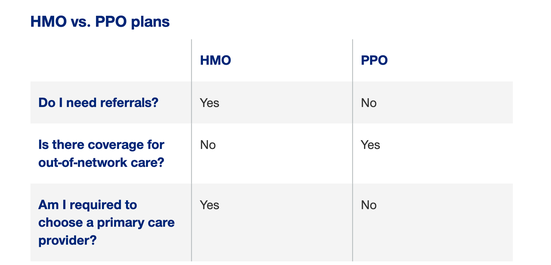
PPO stands for Preferred Provider Organization, and it gives you more flexibility in choosing a healthcare provider.
- See both in-network and out-of-network providers.
- Skip a referral from a primary care provider (PCP)- With a PPO plan, you can directly go to any in-network or out-of-network specialist without needing a referral.
- PPO plans usually come with higher monthly premiums- With the freedom of choosing an out-of-network provider and bypassing a PCP referral comes higher costs monthly for the plan.
- Patients will likely need to submit the claim, as opposed to in-network, where the provider typically submits the claim on the patient’s behalf.
When seeing an out-of-network provider, PPO insurance covers a portion of the visit, but at the insurance companies out-of-network rate. As the provider does not have a contract with the insurance company, the rate insurance covers is often lower than if the provider were in-network.
HMO stands for Health Maintenance Organization and is more restrictive with its coverage. HMO requires you to:
- See providers within the insurance network.
- See a PCP before seeing a specialist.
If you try to see an out-of-network provider, the insurance company will likely not cover the cost, and you will have to pay the full amount. The only case where out-of-network services are covered is in emergencies. In order to see a specialist, a referral from a primary care physician is needed. The goal of this is to help coordinate treatment and have a specialist treat where it is medically necessary.
With the restrictions of an HMO, the monthly premiums run on the lower side compared to a PPO plan.
How to Find Out if a Psychiatrist is In-Network
To check if the psychiatrist you want to see is in-network with your insurance company, there are several ways to verify with NeoPsych or other practices.
- Looking at the practice’s website to see the insurance they accept.
- Call the office to ask if they accept your insurance and if they are in-network or out-of-network.
- Call the number on the back of your insurance card, give the insurance representative the doctor’s name and office address
- Check the insurance companies’ online directory, where you can search for a list of psychiatrists.
Interested in NeoPsych? What is Your Coverage? Copay vs coinsurance?
Coinsurance is more common with:
- Out-of-network care
- PPO plans
- Hospital-based services
- Higher-cost treatments
A copay is a set dollar amount paid at the time of the appointment. This is a fee set by some insurance plans for office visits. Patients are usually charged either a copay or coinsurance, but not both at the same time for the same service.
Insurance coverage refers to how much the insurance company will pay for the visit.
Coverage may include:
- A percentage of the cost (coinsurance)
- Fixed copays
- Full coverage after deductibles are met
For example, the insurance states that they cover 80%, therefore the patient is responsible for the remaining 20%. This 20% is known as coinsurance, as it is a percentage of the cost.
What is a Deductible?
A deductible is the amount that you have to pay out of pocket before the insurance kicks in. For example, if your deductible is $1,500, then you have to pay $1,500 in medical expenses out of your own pocket before insurance starts covering services.
Some insurance companies do not cover anything until the deductibles are paid. In this case, you would have to pay the full amount before your copay or coinsurance is applied.
Whether this applies to you, you would have to review your insurance benefits and pay attention to phrases like:
- “Copay applies after deductible”
- “Subject to deductible”
- “Deductible waived”
- “Coinsurance after deductible”
You can also call your insurance company and ask questions, such as whether the deductible has to be reached before the copay or coinsurance is applied.
What is a Superbill
A superbill is a detailed receipt that is provided by healthcare or therapy providers that you, as the patient, give to the insurance company. When seeing a provider, you will pay for the visit upfront and then submit the superbill to your insurance company yourself to request reimbursement.
The superbill will contain:
- Diagnosis codes
- Procedure codes
- Provider information
- Dates of service
- Charges paid
What is an Insurance Claim?
An insurance claim is what happens after the service and is essentially the request of payment for care from the insurance company. This is where the insurance company also decides on what the patient owes, such as the copays, coinsurance, and deductibles.
The claim includes:
- Diagnosis codes
- Procedure codes
- Dates of service
- Provider information
- Treatment charges
Claim Denied, Now What?
In psychiatric services, claim denials tend to be relatively common and may be due to administrative reasons, missing prior authorization, referral issues, or questions regarding the medical necessity of the service. If your claim was denied, fortunately, there are ways to appeal it.
Appeals may involve:
- Correcting billing errors
- Submitting medical records
- Providing letters of medical necessity
- Requesting peer-to-peer reviews

Dr. Thomas Hughes is an adolescent and adult interventional psychiatrist. He is the owner and founder of Heard Medical and NeoPsych in Glendale, CA. He specializes in medication management and Transcranial Magnetic Stimulation for depression, anxiety, OCD, and PTSD.
Esha Nushrat is a pre-medical student interested in Neurology. She has been working in mental health and volunteers at organizations such as Stride in Recovery and NAMI