
NeoPsych
Customized Accelerated TMS Therapy in Glendale and Los Angeles, CA
Accelerated TMS
What is Accelerated TMS?
Accelerated TMS refers to a TMS protocol that is completed significantly faster than the standard protocol, usually within 5 days. There are also options to complete accelerated treatment in 1 day, 5 days, or 10 days. Whichever option you choose, the decreased time commitment is a more viable option for people living a busy lifestyle, including those seeking TMS treatments in Glendale and Los Angeles, CA.
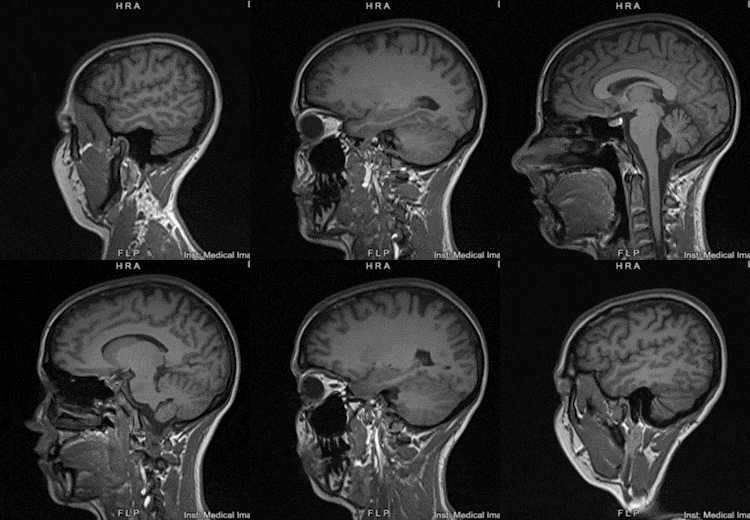
The accelerated TMS protocol typically consists of ten 3-10 minute sessions per day for 5 consecutive days, totaling 50 treatments. The day starts in the morning and ends in the late afternoon or evening. The first step of this highly customized accelerated TMS therapy begins with an MRI that gives a specific target area on your brain. The MRI is optional, but it is offered to enhance customization.
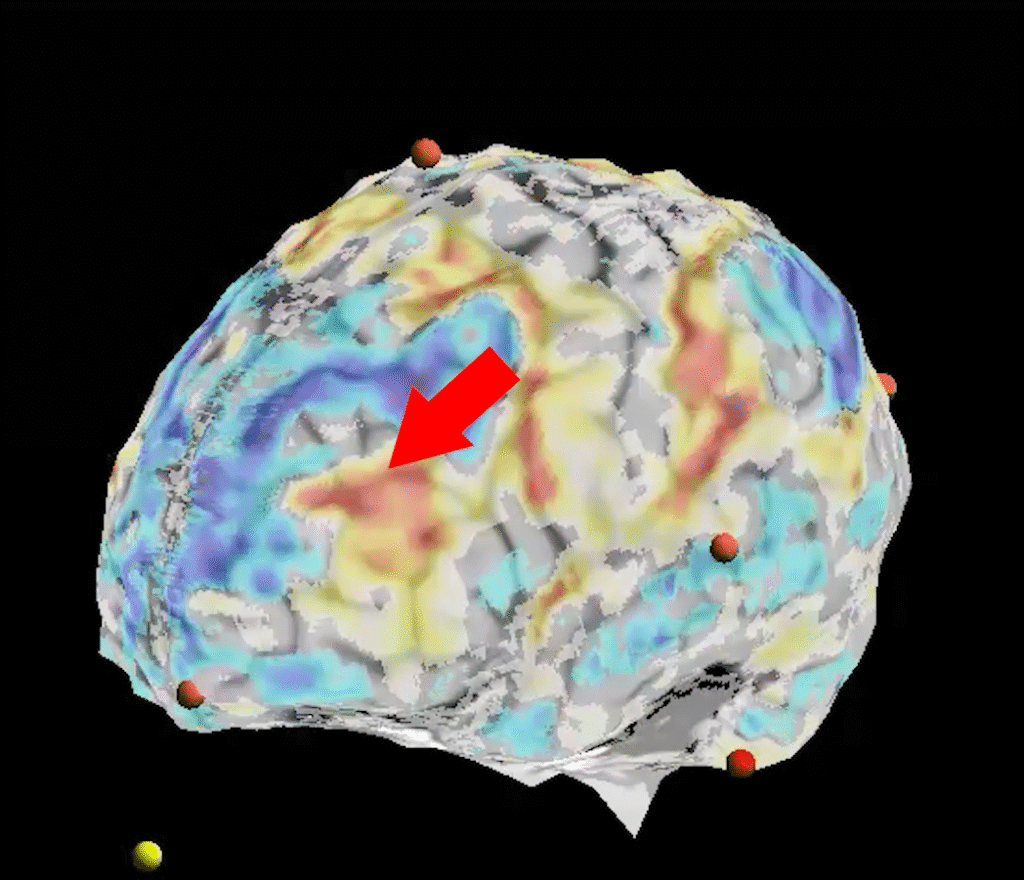
- Picture 1 with color/arrow– This is the most precise MRI targeting for the TMS treatment location that NeoPsych offers
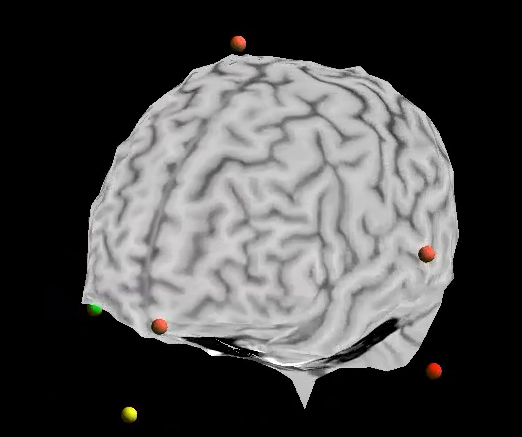
- Picture 2 without arrow/color– Less precise, but this option still offers great quality MRI targeting for the treatment location
- Traditional (blind) Targeting/Mapping (scroll down) is also available and can be viewed in the video below “TMS Mapping”
To see what sets Neopsych apart from other practices, view the photos on this page that illustrate the precision MRI targeting that we offer. You can also view the process for precision MRI targeting via the YouTube video below: “Customizing TMS: 5 Day Depression Treatment.”
Traditional TMS Mapping (Blind)
fcMRI guided TMS
Neopsych uses a highly trained neuroscientist for each reading. Please watch the videos above for more detail.
The benefit of TMS is that you only need to stimulate the very surface of the brain in order to send signals into the deeper areas that control depression and anxiety. NeoPsych’s MRI technology is able to maximize the location to which these signals are sent, supporting a more personalized experience for patients considering TMS therapy in Glendale, Los Angeles, CA, and surrounding areas.
Without the correct MRI technology, it is impossible to identify the optimal target location by traditional TMS mapping. Above is a video showing a traditional blind mapping and pictures that further showcase the difference in specificity when finding treatment locations.

Still not sure what you’d like? Scroll down for more information about Accelerated TMS or click the button below to speak with a representative.
More options for targeting (Mapping)..
Mapping with 3D Guided TMS
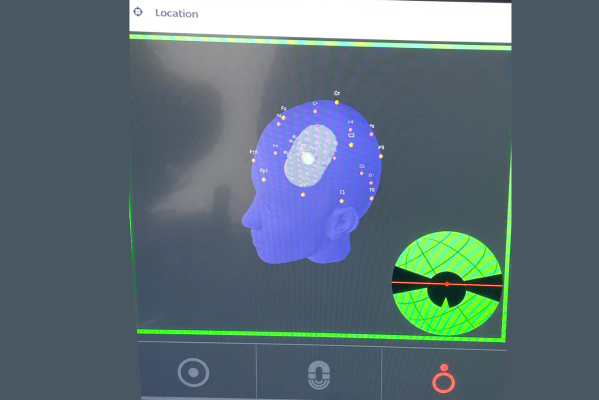
3DG TMS uses the traditional methods of mapping. It does not use an MRI. 3DG is a method of RECREATING the angle and location of the target from session to session. 3DG does this by creating an individualized head model of each patient. This model allows the provider to place the coil in the same location each day, maximizing the consistency between sessions. It also helps providers visualize if the treatment coil moves out of place during treatment. With 3DG there is no need for a cap or measuring the treatment location.
Mapping with Traditional TMS (Cap)
Using a cap and anatomical measurements requires traditional methods of mapping and target location selection. Neither of these methods use MRI. These methods are perfectly reasonable and have been a trusted part of TMS since the procedure became available to the public in 2008. There are issues with consistency from session to session and head movement, which is why many patients exploring TMS treatments may want to learn more about the targeting options available before choosing a protocol.
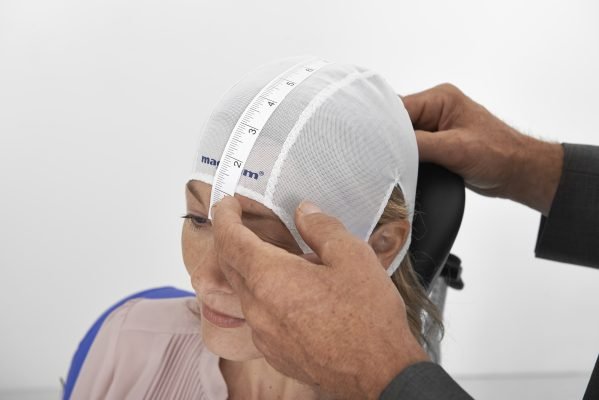
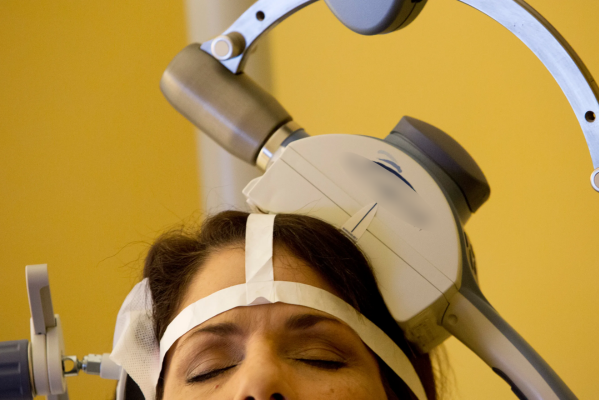
The first TMS session requires a mapping, which entails your provider using landmarks of the brain and head to locate where to administer treatment. How the treatment location is found depends on the doctor and the equipment being used. Here is a link to learn more about mappings. The next TMS sessions consist of the provider placing the treatment coil in the exact same location that was discovered on the first session.
No need for a mapping in your follow up sessions. The coil will be placed at the treatment location that was found on your first session. After each session all you need to do is relax for about 50 mins and then go to your next appointment. Patients usually stay on grounds, with lunch and entertainment provided.
1. Arrive for your appointment.
2. Check in with your provider.
3. Discuss side effects, discuss benefits, and answer questions.
4. Place coil at treatment location and start treatment.
5. Come back the next day and repeat.
- Patients suffering from Major Depression. Standard TMS has been used for a number of conditions, including, but not limited to Major Depression, Anxiety, Tinnitus, OCD, Anxious Depression, Pain, and Insomnia. Accelerated TMS has been utilized primarily for Major Depressive Disorder. There is ongoing evidence being collected about accelerated TMS being appropriate for conditions other than Major Depression
- Patients with a busy schedule. Although plenty of people complete the standard 36 treatments, 7 weeks worth of treatment can be difficult. Accelerated TMS would still require taking at least one week from work, but this may allow for more convenience depending on how daily treatments would impact you schedule.
- People who want to go to a specific provider. Even though TMS is readily available in most places in the United States, a specific provider might be in a different city or state. It is common for people to travel to see a doctor for a specific type of TMS. Hotels, scheduling, and other accommodations can be made before treatment starts.
- People who desire no involvement with insurance. Accelerated TMS is not covered by insurance. This expedites the treatment process, and allows for more efficient coordination between doctor and patient. If you would rather pay out of pocket vs. go through insurance, accelerated TMS would be an option.
Insurance coverage typically requires two different classes of antidepressant, one recent course of talk therapy, and a diagnosis of severe depression. Because accelerated TMS is not covered by insurance, you don’t necessarily need to try multiple antidepressants to be a candidate for treatment.
NeoPsych offers several Accelerated TMS protocols, such as the ONE-D (1-day protocol), the 5 day protocol, and 10-day accelerated schedules. Each protocol delivers multiple TMS sessions per day to achieve therapeutic dose more quickly. The choice depends on condition severity, patient availability, and medical eligibility. Your provider helps you pick the most suitable protocol based on your symptoms, previous treatment history, and lifestyle.
With Accelerated TMS, many patients report initial improvements within just a few days (often by the end of a 5-day or even 1-day protocol). Mood uplift, better sleep, reduced anxiety may be noticed early on. However, full benefit often requires follow-up sessions or booster treatments to maintain gains. Effect sizes may vary depending on condition (depression, anxiety, PTSD), patient age, treatment history, and protocol used.
Accelerated TMS is more intensive in terms of session frequency and total magnetic pulses over a shorter time. That said, NeoPsych ensures safety with careful screening (for seizure risk, metal in skull, etc.) and monitoring. Side effects may include increased scalp discomfort or fatigue but are generally well tolerated and transient. The risk of serious adverse events remains low when done under expert supervision.
Before starting, NeoPsych will conduct a full psychiatric evaluation, medical history review, possibly lab work or genetic testing to tailor the treatment. Make sure to have any prior treatment records, including medications, therapy history. On days of treatment, avoid caffeine or heavy meals immediately before sessions if they affect you. Wear comfortable clothing, arrive on time, and plan for travel, since frequent daily sessions might require time commitment. Also, arrange for rest periods, as you may feel tired after sessions.
Accelerated TMS tends to cost more per day due to multiple sessions but may reduce overall time and some overhead. Many insurance plans that cover standard TMS Treatment may also cover accelerated protocols, but pre-authorization is often required. NeoPsych helps patients verify insurance benefits and estimate out-of-pocket costs. For self-pay or underinsured patients, payment plans or financing may be offered. Transparent estimates are provided before you commit.