Table of Contents
If you or a loved one are struggling with anxiety, you know how overwhelming the constant worry, racing thoughts, and physical symptoms can be. While anti-anxiety medications help many people, they do not work for everyone. Some individuals experience unwanted side effects, limited symptom relief, or prefer a non-medication approach.
At NeoPsych in Glendale, California, we offer Accelerated Transcranial Magnetic Stimulation (aTMS) as an innovative treatment option for anxiety. This rapid protocol allows patients to complete treatment in just three days. This is an off-label treatment that patients at NeoPsych have reported great benefit from. We are offering it as an option for patients that meet criteria.
Can TMS Treat Anxiety?
TMS uses magnetic pulses to stimulate specific areas of the brain involved in emotional regulation. Although TMS is best known for treating depression, growing research suggests that targeted stimulation of the right dorsolateral prefrontal cortex (RDLPFC) may help reduce symptoms of anxiety by calming overactive brain circuits.
For individuals with generalized anxiety disorder (GAD), panic disorder, or chronic anxiety symptoms, Accelerated TMS may provide an alternative for those looking to avoid long-term medication use or if no other treatments have been effective
What Is Accelerated TMS?
Traditional TMS treatments typically require one session per day, five days per week, for approximately six weeks.
Accelerated TMS condenses treatment into a much shorter timeframe.
At NeoPsych, our anxiety protocol consists of:
- Three treatment days
- Two TMS sessions each day
- Approximately 25 minutes of stimulation per session
- 50-minute rest periods between treatments
Why Is the Right Dorsolateral Prefrontal Cortex Treated?
The right dorsolateral prefrontal cortex (RDLPFC) plays an important role in processing fear, stress, and emotional regulation.
Many individuals with anxiety demonstrate increased activity within this region. The goal of Accelerated TMS is to reduce excessive neuronal activity, helping the brain develop healthier patterns of communication that may decrease anxiety symptoms.
How Does the Anxiety Protocol Work?
Our Accelerated TMS anxiety protocol combines two inhibitory stimulation patterns:
- continuous Theta Burst Stimulation (cTBS)
- 1 Hz
Together, these protocols deliver pulses designed to reduce excessive neural activity in the targeted brain region.
What Does "Inhibitory" Mean?
Inhibitory TMS protocols reduce excessive brain activity rather than increasing it.
Individuals with anxiety often have hyperactive neural circuits involved in fear processing and worry. Low-frequency stimulation and continuous Theta Burst Stimulation encourage these networks to become less active over time.
Researchers believe these stimulation patterns promote neuroplasticity—the brain’s ability to reorganize and adapt—which may contribute to long-term symptom improvement.
Understanding Neuroplasticity and Synaptic Long-Term Depression
One way the brain changes is through a process known as Long-Term Depression (LTD).
Despite its name, LTD is unrelated to depression as a mental health condition. Instead, it describes the weakening of overly active connections between neurons. For anxiety treatment, this process may help reduce excessive communication within fear-related brain circuits, allowing patients to experience fewer anxious thoughts and physical symptoms.
1 Hz TMS and cTBS are two ways to achieve synaptic long-term depression for the hyper areas of the brain.
What Is 1 Hz TMS?
1 Hz stimulation delivers one magnetic pulse every second.
Because it is a low-frequency protocol, it has an inhibitory effect on the brain, helping calm areas that are overactive in anxiety disorders.
What Is Continuous Theta Burst Stimulation (cTBS)?
Continuous Theta Burst Stimulation (cTBS) delivers rapid bursts of magnetic pulses over a short period of time. With most protocols there is a break in between pulse trains. With continuous TBS, the definition is within the name. For example, 40 secs of treatment with cTBS will have one consistent train pulses firing for the entirety of the 40 seconds. In contrast, with rTMS, 40 secs of treatment will deliver 2 trains of treatment.
This stimulation pattern is designed to efficiently reduce activity in targeted brain regions while shortening overall treatment time compared with traditional TMS protocols.
How Long Does Accelerated TMS Take?
Unlike standard TMS programs that require daily visits for more than a month, Accelerated TMS allows eligible patients to complete treatment in just three days.
This condensed schedule can be especially helpful for individuals with busy work schedules or those traveling for treatment.
Cost of Accelerated TMS for Anxiety
Insurance coverage for Accelerated TMS varies and is often limited. At this time, there is no insurance coverage for accelerated TMS for anxiety.
At NeoPsych, we provide a transparent cost estimate before treatment begins and can discuss available financing options to make care more accessible.
Side Effects of Accelerated TMS
Accelerated TMS is generally well tolerated. The most common side effects are temporary and may include:
- Mild headache
- Temporary scalp discomfort
- Fatigue
- Temporary increase or fluctuation in symptoms (sometimes referred to as the “TMS dip”)
Most side effects resolve shortly after treatment.
Is Accelerated TMS Right for You?
If anxiety continues to interfere with your daily life despite therapy or medication—or if you prefer a non-medication treatment option—Accelerated TMS may be worth exploring.
At NeoPsych in Glendale, California, our team conducts comprehensive evaluations to determine whether Accelerated TMS is an appropriate treatment for you, based on your symptoms, medical history, and treatment goals.
Since our accelerated protocol for anxiety is a short course of treatment lasting only three days, this makes it a treatment that is easy to access throughout the greater Los Angeles area. We are located in Glendale, but this protocol and our flexible clinic hours make scheduling easy.
Contact our office today to schedule a consultation and learn whether accelerated TMS for anxiety could help you find lasting relief from anxiety.
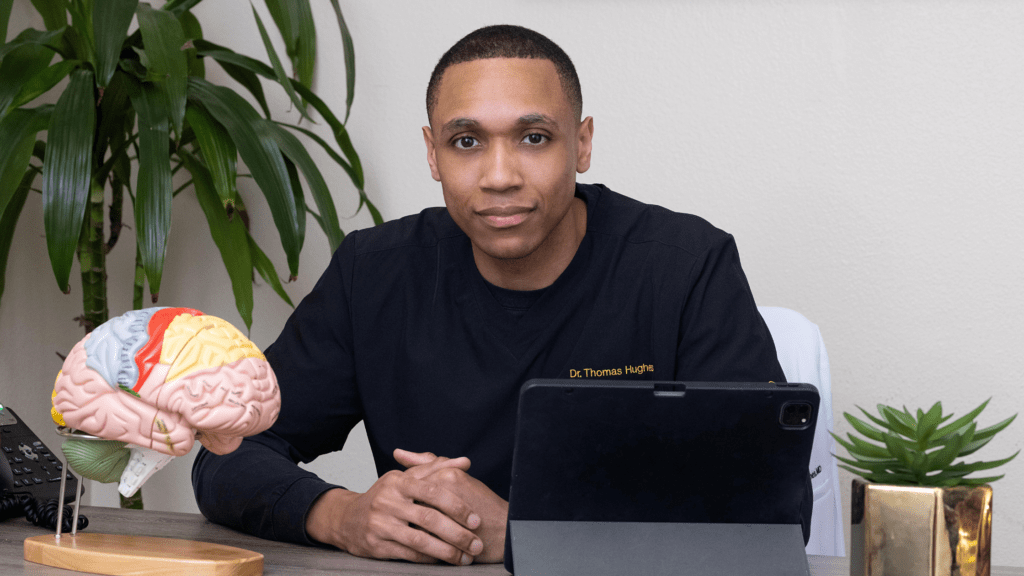
Dr. Thomas Hughes is an adolescent and adult interventional psychiatrist. He is the owner and founder of Heard Medical and NeoPsych in Glendale, CA. He specializes in medication management and Transcranial Magnetic Stimulation for depression, anxiety, OCD, and PTSD.
Esha Nushrat is a pre-medical student interested in Neurology. She has been working in mental health and volunteers at organizations such as Stride in Recovery and NAMI
This blog post has been medically reviewed by Dr. Thomas Hughes, the practicing provider at NeoPsych.