
Table of Contents
Bipolar disorder is a mental illness with extreme shifts in mood. In this blog, we will be covering what exactly bipolar disorder is and the different types of the disorder that exist. We will then review the current treatment options that are used to help treat it.
What is Bipolar Disorder?
Bipolar disorder is where an individual experiences extreme mood changes, also known as manic episodes. Manic episodes are where the person experiences unusually elevated moods with an increase in activity compared to their usual self. In individuals with bipolar disorder, this shift in mood, energy, and activity levels tend to occur in episodes. Mania can be followed by depressive episodes where the individuals experiences deep sadness, hopelessness, and low energy.
What is a Manic Episode and the Different Types?
A manic episode in bipolar disorder is described to be an abnormally elevated or energized mood that lasts at least a week (less if hospitalization occurs). During this period, common signs are a decreased need of sleep, yet still feeling energized, racing thoughts, impulsive and risky behavior, and euphoric mood.
There are two types of mania: mania and hypomania. The difference between the two is their intensity and duration. Mania is more severe and can disrupt daily life and work relationships. It also tends to last for at least 7 days.
Hypomania is less intense than mania, but causes high energy, mood changes, impulsive behavior, and less need for sleep. The duration is shorter than manic episodes, and the intensity is lower as well. As the symptoms are less severe, they tend to cause fewer disruptions in your daily life.
What are the Different Types of Bipolar Disorder?
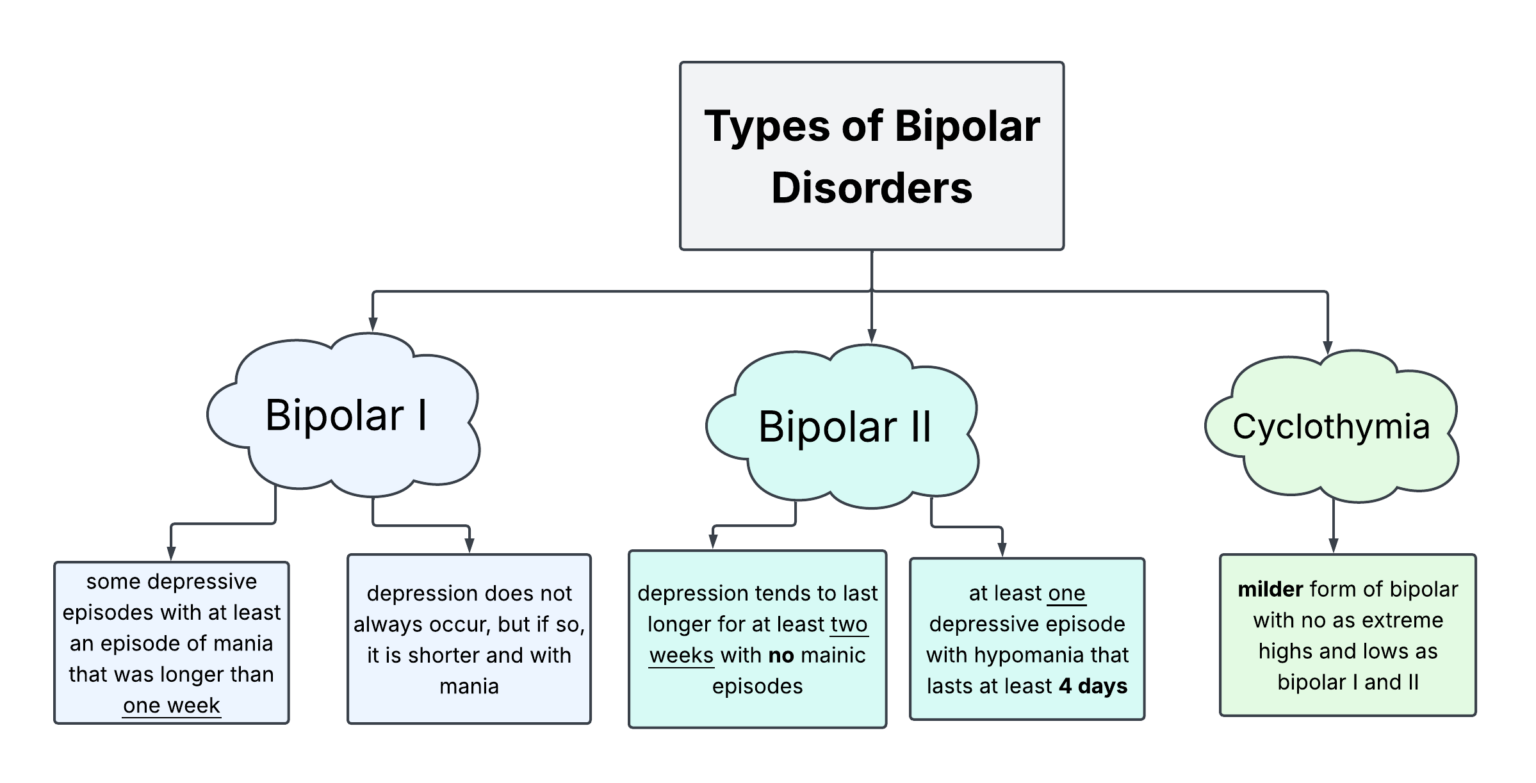
There are two types of bipolar disorder: bipolar I and bipolar II. The two types are differentiated by mania and hypomania and the prevalence of depressive episodes. In bipolar I, an individual experiences manic episodes, and these manic episodes are more severe than those in bipolar II and last longer, spanning at least 7 days. In bipolar I, depressive episodes are common, but not required for diagnosis.
Bipolar II consists of hypomanic episodes and depressive periods that last longer than those in bipolar I. Depressive episodes last for at least 2 weeks and are more frequent than those in Bipolar I.
Cyclothymic disorder is a milder form of bipolar disorder that causes similar emotional highs and lows; however, it is not severe enough to be classified as bipolar I or II. There are unpredictable mood swings that can affect daily life and cause issues with personal and work relationships.
What are Current Treatments for Bipolar?
Current treatments for bipolar disorder include a combination of medications known as mood stabilizers and psychotherapy. Common mood stabilizers used for bipolar disorder include medications such as lithium, depakote, and lamictal, which works to reduce excitatory pathways and reduce the highs of mania.
Other treatments include electroconvulsive therapy (ECT) and transcranial magnetic stimulation (TMS).
How Can TMS Help with Bipolar?
TMS can assist with the depressive episodes that occur with bipolar disorder. TMS is FDA-approved to treat depression, with a target site around the left dorsolateral prefrontal cortex. However, research on the efficacy of TMS for treating mania remains limited. Of note, it is recommended for anyone with Bipolar disorder to be on a mood stabilizer if engaging in a course of TMS.
If you have any case-specific questions, Dr. Hughes is happy to discuss them with you via the website contact form or by phone.

Dr. Thomas Hughes is an adolescent and adult interventional psychiatrist. He is the owner and founder of Heard Medical and NeoPsych in Glendale, CA. He specializes in medication management and Transcranial Magnetic Stimulation for depression, anxiety, OCD, and PTSD.
Esha Nushrat is a pre-medical student interested in Neurology. She has been working in mental health and volunteers at organizations such as Stride in Recovery and NAMI
This blog post has been medically reviewed by Dr. Thomas Hughes, the practicing provider at NeoPsych.