Table of Contents
Where Accelerated TMS in Glendale All Started
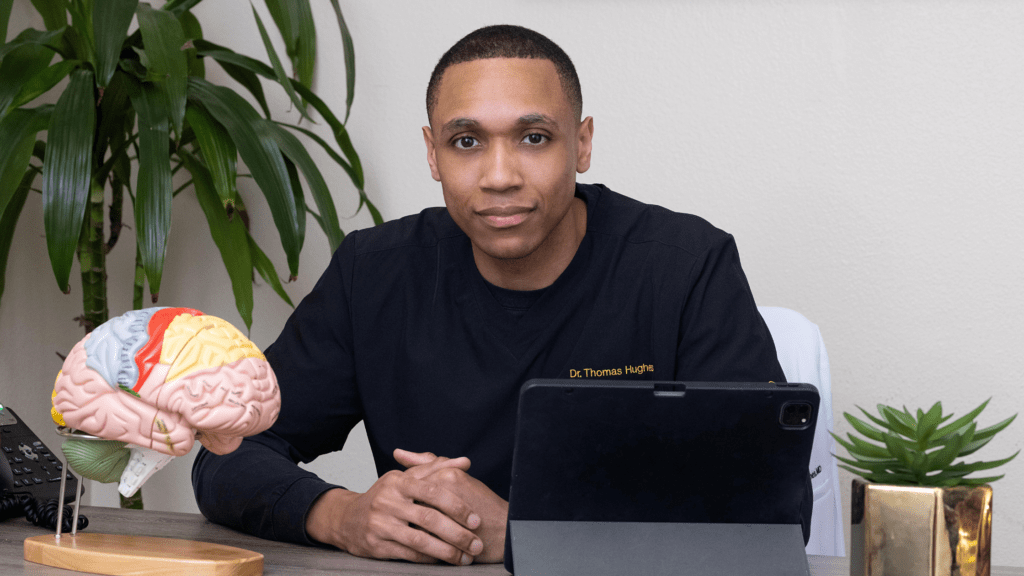
NeoPsych is the first practice to offer accelerated TMS in Glendale, CA. We are one of Southern California’s most advanced TMS practices, led by Dr. Thomas Hughes. NeoPsych is also one of the first in the country to offer the 1 day accelerated protocol. We offer several other accelerated protocols to accommodate different patient needs, schedules, and clinical profiles — all using state-of-the-art Magstim equipment that can be combined with functional connectivity MRI targeting. Below is more information on how these new advances can be helpful if you’re in the area.
What Is Accelerated TMS?
Transcranial Magnetic Stimulation (TMS) is an FDA-cleared, non-invasive treatment that uses magnetic pulses to stimulate specific regions of the brain associated with mood regulation. Unlike antidepressants, TMS works directly on the neural circuits involved in depression — without systemic side effects like weight gain, fatigue, or sexual dysfunction.
Accelerated TMS takes this therapy further. Rather than spreading treatment over six to eight weeks with one session per day, accelerated protocols deliver multiple sessions per day over a condensed timeframe — sometimes as short as a single day or one week.
Accelerated TMS is particularly valuable for people who:
– Have tried multiple antidepressants without adequate relief (treatment-resistant depression)
- Cannot commit to a six-to-eight week daily treatment schedule
– Need faster results due to the severity of their symptoms
- Prefer a medication-free approach
– Want to travel to a specific specialist without an extended stay
How Accelerated TMS Works: The Science
The most commonly used form of stimulation in accelerated TMS is intermittent Theta Burst Stimulation (iTBS) —(50 Hz). It is a highly efficient pulse pattern that can deliver therapeutic effects in sessions as short as three minutes, compared to the 20-40 minutes for traditional TMS (10 Hz).
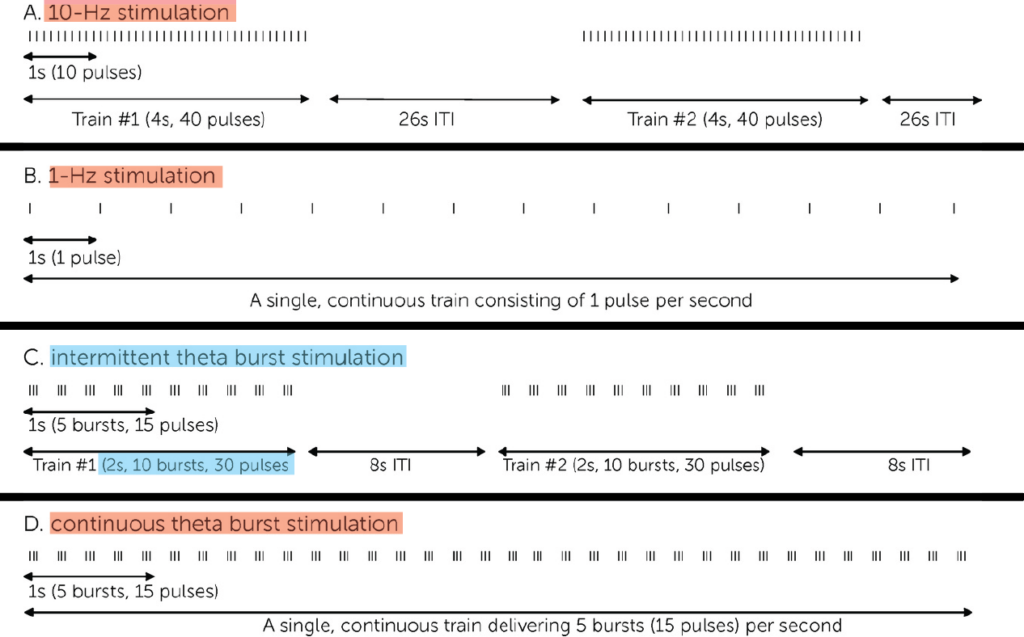
The key to accelerated protocols is neuroplasticity: the brain’s ability to reorganize itself by forming new neural connections. By delivering repeated bursts of stimulation within a single day — typically with 50-minute rest intervals between sessions — accelerated TMS is thought to amplify the brain’s capacity to consolidate therapeutic changes. Each session builds on the last, creating cumulative shifts in the dysfunctional circuits that drive depression.
What Accelerated Protocols Does NeoPsych offer?
NeoPsych’s 5 Day Accelerated TMS
NeoPsych’s flagship accelerated offering is the 5 day TMS protocol with fcMRI guidance. This protocol delivers a powerful amount of stimulation + precise targeting. Each of the 5 days include 10 brief iTBS sessions spaced throughout the day, from morning through late afternoon, with 50-minute rest intervals between each session. Although fcMRI is not required, it is recommended.
The protocol is designed for adults with major depressive disorder who have not responded to multiple antidepressant trials or psychotherapy. It is especially well-suited for patients who need rapid improvement, those who cannot commit to a traditional six-to-eight week daily schedule, and those seeking a non-medication-based alternative with rapid, sustainable outcomes.
NeoPsych’s 10-Day Accelerated TMS Protocol
For patients who want the high-dose benefits of accelerated treatment but prefer a gentler daily schedule, NeoPsych offers a 10-Day Accelerated TMS Protocol. This spreads 50 total iTBS sessions across two consecutive weeks — five sessions per weekday — rather than ten/day. This protocol is only used by people that can’t take a full day off.
ONE-D Protocol (1-Day Accelerated TMS) at NeoPsych
NeoPsych also offers the ONE-D Protocol — a single-day intensive TMS session. This option delivers a concentrated course of iTBS in one extended visit, making it ideal for patients traveling from outside the Los Angeles area or those with very limited time off work. For 10 hours, patients receive two treatments per hour— totaling 20 treatments in the day.
Precision Targeting: What Sets NeoPsych TMS Apart
Not all TMS is created equal. One of the most important variables in TMS outcomes is where the coil is placed. Traditional “blind” mapping uses surface landmarks to estimate the treatment location — a reasonable approach, but one that leaves significant room for error.
At NeoPsych, patients have access to multiple targeting methods:
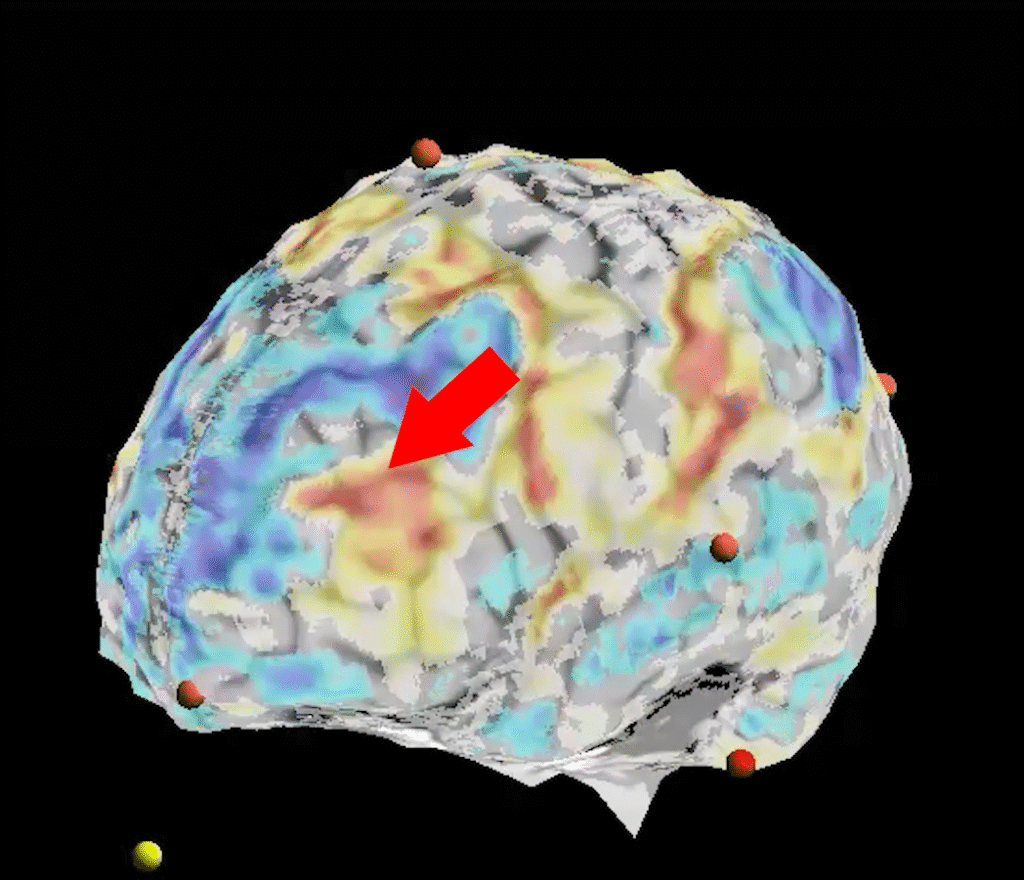
Functional Connectivity MRI (fcMRI) Targeting is the most precise approach. An MRI is used to map the patient’s individual brain activity and connectivity, allowing the treatment coil to be positioned at the optimal location for that person’s unique brain. Here is an example of the targeting.
3D-Guided (3DG) TMS creates an individualized 3D model of the patient’s head, allowing the provider to consistently replicate the coil position across every session without requiring a cap or scalp measurements. While it does not use MRI, it significantly improves session-to-session consistency compared to traditional methods.
Traditional Anatomical Mapping uses a cap and standard anatomical measurements to estimate the target location. This approach has been the backbone of TMS since it became available to the public in 2008 and remains a reliable option — particularly for patients in standard protocols. NeoPsych does not use caps for any of its protocols. However, upon request this could be accommodated if necessary.
Understanding these differences matters. Without correct targeting and inconsistency, it is difficult to identify the optimal stimulation location, and outcomes may be less predictable. The precision MRI targeting offered at NeoPsych represents the state of the art in clinical TMS delivery.
What to Expect: The Day-by-Day Experience
Day One (Initial Session)
Your first session begins with a mapping — the process of determining the exact location on your scalp where the TMS coil will be placed. This is also when the motor threshold (MT) will be determined. The MT tells the doctor how much energy to use on your brain. For MRI-guided protocols, your brain imaging data will be reviewed to identify the personalized target prior to your 1st appointment.
You’ll be seated comfortably in a chair throughout treatment. The TMS device is positioned near your head, and you may feel a tapping or clicking sensation at the treatment site. Sessions are brief (typically three to ten minutes each), and you will be fully awake and alert throughout.
Follow-Up Sessions
No mapping is needed for subsequent sessions. The coil is simply placed at the location identified on day one. Between sessions, you’ll have approximately 50 minutes to rest, relax, or engage in quiet activities. Patients typically remain on-site during this time; NeoPsych provides entertainment to make the day as comfortable as possible.
Symptom Monitoring
Throughout your treatment, the clinical team will check in regularly to monitor your response, discuss any side effects, and answer questions. This ongoing communication helps the team adjust the treatment approach if needed.
After Treatment
Most patients are awake, alert, and able to resume normal activities immediately following each session. There is no anesthesia and no sedation. You can drive yourself to and from appointments.
Who Is a Candidate for Accelerated TMS?
Accelerated TMS is not for everyone, but it is appropriate for a broader range of patients than many people realize. Good candidates typically include:
- Patients that have not responded adequately to two or more antidepressant medications. Because accelerated TMS is generally not covered by insurance, meeting criter for TRD may not be necessary
- People with time constraints. A six-to-eight week daily treatment schedule is simply not feasible for many working professionals, caregivers, or students. Accelerated protocols make it possible to complete the full therapeutic course in one to two weeks — or even a single day — allowing treatment to fit within a brief leave from work or a short trip to the area.
- Out-of-town patients. Glendale is accessible to patients across Southern California and easy to reach from anywhere in the country.
- Patients seeking a non-medication approach. TMS does not involve systemic medications, meaning there are no drug interactions, no withdrawal effects, and none of the common side effects associated with antidepressants.
Side Effects and Safety
Accelerated TMS has a well-established safety profile. The most common side effects are mild and temporary:
- Scalp discomfort is the most frequently reported side effect, typically mild and responsive to over-the-counter pain relievers. Discomfort tends to decrease after the first few sessions as patients acclimate to the treatment.
- Headache. This is the least common side effect. Interestingly enough, TMS does not seem to worsen or prompt migraines or headaches in patients with a history of either condition
- Fatigue is possible after intensive daily sessions, though most patients find it manageable and report improvements in sleep quality as treatment progresses.
- Rare, but serious side effects of seizures, which occur at an estimated rate of approximately 1 in 10,000 sessions. NeoPsych uses FDA-approved devices and conducts careful pre-treatment screening — including review of seizure history, metal implants in the skull, and other contraindications — to minimize this risk. The practice monitors patients throughout treatment.
- Temporary worsening of depressive or anxiety symptoms– when your brain is trying to build more connections, there can be increased anxiety or worsened depressive symptoms— similar to the way people are often sore after a hard work out at the gym.
How Quickly Can You Expect Results?
One of the most compelling aspects of accelerated TMS is the speed of response. With standard TMS, patients typically wait two to four weeks before noticing meaningful improvement. With accelerated protocols, initial improvements in mood, sleep, and anxiety are often noticed within just a few days of beginning treatment — sometimes by the end of the first week. There are some patients that have to wait a few weeks
That said, full benefit typically unfolds gradually over the weeks following treatment, as the neuroplastic changes initiated during the protocol continue to consolidate. Many patients report continued improvement for weeks or even months after the sessions end. Booster or maintenance treatments may be recommended for some patients to sustain long-term gains.
As with any medical treatment, individual responses vary. Factors including the severity and duration of depression, co-occurring conditions, prior treatment history, and the precision of coil targeting all influence outcomes. A thorough consultation at NeoPsych will help set realistic expectations based on your specific clinical profile.
Insurance, Cost, and Financing
Standard TMS is covered by most major insurance plans for treatment-resistant depression, typically requiring documentation of failed medication trials and a qualifying diagnosis. NeoPsych assists patients in verifying coverage, obtaining prior authorization, and submitting claims.
Accelerated TMS is generally not covered by insurance. This has a meaningful upside: because you are paying privately, there is no need to satisfy lengthy insurance requirements (such as failing multiple medication classes or completing a full course of psychotherapy first). You can begin treatment based on your clinical needs rather than insurance criteria, and the coordination between you and your provider is faster and more efficient. The list of insurances reimbursing for accelerated TMS is always changing, so check with a NeoPsych representative for the latest.
Out-of-pocket costs for accelerated TMS vary depending on the protocol chosen. NeoPsych provides transparent cost estimates before you commit, and financing options may be available. Many patients find that the ability to complete treatment in days rather than weeks — with no time off for medication side effects or weeks of uncertain waiting — represents significant value even at a higher upfront cost.
Why Glendale for Accelerated TMS?
Glendale sits at the center of one of the most medically sophisticated regions in the country, with easy access for patients throughout Los Angeles County and the greater Southern California area. Whether you’re coming from Burbank, Pasadena, Beverly Hills, downtown Los Angeles, or beyond, NeoPsych’s location at 1510 S. Central Avenue is accessible and central.
More importantly, Glendale is home to NeoPsych— a practice specifically built around advanced TMS protocols and personalized psychiatric care.
Accelerated TMS vs. Other Rapid Depression Treatments
Patients exploring options for treatment-resistant depression often encounter several alternatives to accelerated TMS. Here’s how they compare:
Ketamine/Esketamine (Spravato) can produce rapid antidepressant effects — sometimes within hours. However, the effects are often short-lived without repeated infusions, and there are concerns about dissociative side effects and dependency potential with long-term use. Accelerated TMS produces effects that tend to be more durable, and it does not involve psychoactive substances or the monitoring requirements associated with ketamine.
Electroconvulsive Therapy (ECT) is a highly effective treatment for severe depression, but requires general anesthesia, carries risks of memory impairment, and carries significant stigma. Accelerated TMS produces no memory effects, requires no sedation, and is fully non-invasive. For many patients, it represents a compelling alternative before escalating to ECT.
Standard antidepressants can take four to six weeks to produce meaningful effects, come with a range of side effects, and help only 30 to 40 percent of patients with major depression even after multiple trials. Accelerated TMS has a different mechanism of action entirely and can work for patients who have not responded to multiple medications.
Standard (once-daily) TMS is effective and widely covered by insurance, but requires a commitment of six to eight weeks. For many patients, the ability to complete the same therapeutic course in five days represents a life-changing convenience.
Taking the Next Step
If you’re in Glendale, Los Angeles, Burbank, Pasadena, or anywhere in Southern California and are struggling with depression that hasn’t responded to standard treatments, accelerated TMS may be the breakthrough you’ve been looking for.
NeoPsych offers complimentary discovery calls to help you understand your options, determine whether you’re a candidate, and find the right protocol for your needs. You can also book a discovery call directly here.