Table of Contents
If you are pressed for time and cannot afford to take a week off or the daily treatments for 6 weeks, we offer the one-day accelerated protocol. This protocol consists of 20 TMS sessions that can be completed in a single day. In this blog post, we will explore what this protocol entails, its benefits, and the effects of this treatment.
What is ONE-D TMS?
ONE-D stands for Optimized Neuroplastogen Enhanced Depression and refers to sessions compressed into a single day, consisting of 20 treatments, with the day lasting around 10 hours. ONE-D TMS uses intermittent theta burst stimulation (iTBS), with each session lasting only 3 minutes each (600 pulses). With intermittent theta burst stimulation, a train runs for 2 seconds with 10 bursts, followed by an 8-second pause.
The TMS treatments occur every 30 minutes, with each session lasting a total of 10 minutes.
What Does the ONE-D Protocol Target?
The ONE-D protocol is currently used to treat depression, and it targets the left dorsolateral prefrontal cortex (LDLPFC). The LDLPFC is the region that is associated with mood regulation, decision-making, and cognitive control. The LDLPFC is connected to deeper brain regions, such as the subgenual anterior cingulate cortex, which is involved in emotional processing.
What Medications Are Included in the Protocol?
Patients who are scheduled for the ONE-D protocol will also be taking two medications, D-cycloserine and Vyvanse, both of which have been shown to increase neuroplasticity in the brain. These supplements are not accessible everywhere. It would behoove all interested in the 1 day protocol to ask your provider if they are offered.
D-cycloserine is administered at a dose of 125 mg. D-cycloserine is used because it is an NMDA receptor agonist, which means it promotes neuronal network formation. DCS is also used in medicine as an antibiotic to treat tuberculosis.
Vyvanse, or lisdexamfetamine, is taken at a dosage of 20 mg because it increases dopamine release in the brain and prevents dopamine from being reuptaken, thus increasing dopamine availability in the body. This enhances the effects of the TMS treatment’s excitatory protocol.
Both medications will be taken approximately 1 hour before your first treatment session.
The Benefits of ONE-D Treatment
The biggest benefit of the one-day treatment is its time efficiency, as it compresses the standard 6-week treatment into a single day. For individuals who want fewer trips to treatment, the ONE-D does just that while delivering similar outcomes. This is most advantageous in rural areas, where the nearest treatment location is hours away.
The ONE-D treatment is also advantageous for those seeking faster symptom relief while avoiding the medication-related side effects. For those who are also experiencing severe depression, the ONE-D is beneficial in providing faster symptom relief.
The Period After ONE-D Treatment
Results can vary from person to person, and symptom relief is not typically immediate. Although the treatment is completed in a single day, the results take several weeks to emerge as our neural pathways strengthen and adapt.
Some may also experience heightened anxiety post-treatment due to all the neuroplastic changes that are occurring from the treatments. This is analogous to the fatigue that is experienced from an intense workout, where one experiences muscle soreness from it. This temporary worsening of symptoms does not mean that the treatment has failed, and those who experience a dip may later experience improvements in mood and functioning.
What Do Patients Experience in the Dip?
A post-treatment dip can look different from person to person. Some individuals report:
- Feeling emotionally flat or more tearful
- Increased fatigue or the need for extra sleep
- Temporary worsening of depressive symptoms
- Reduced motivation
- Mild anxiety or irritability
Scheduling Your ONE-D Treatment
If you are interested in scheduling your ONE-D protocol, feel free to contact us at our office number with any questions. Our Glendale office offers flexible hours to make scheduling your treatment easy.
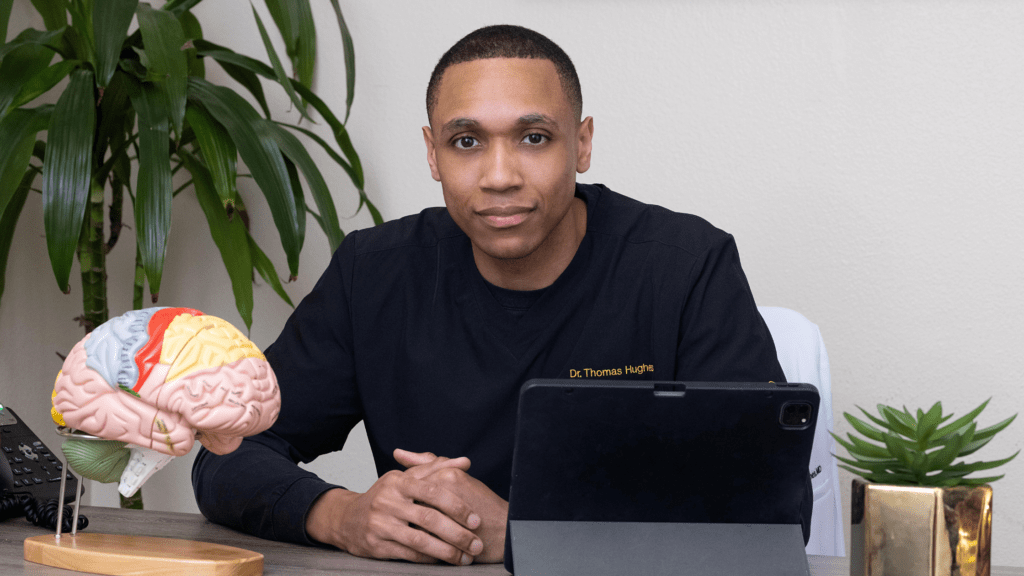
Dr. Thomas Hughes is an adolescent and adult interventional psychiatrist. He is the owner and founder of Heard Medical and NeoPsych in Glendale, CA. He specializes in medication management and Transcranial Magnetic Stimulation for depression, anxiety, OCD, and PTSD.
Esha Nushrat is a pre-medical student interested in Neurology. She has been working in mental health and volunteers at organizations such as Stride in Recovery and NAMI
This blog post has been medically reviewed by Dr. Thomas Hughes, the practicing provider at NeoPsych.