Table of Contents
The Different Types of TMS
Patients researching Transcranial Magnetic Stimulation (TMS) soon discover that there are several different types of TMS for depression. Below are a few of the more popular types:
- Standard TMS
- Deep TMS
- Accelerated TMS
- Theta Burst
TMS is fairly new to the public, leaving many looking for TMS in Glendale, and beyond, with questions about which protocol or machine is better. The answer is less complicated than many marketing materials suggest.
All FDA-cleared TMS systems use magnetic fields to stimulate brain regions involved in mood regulation. While different systems vary in coil design, treatment protocols, and session length, the scientific literature generally supports TMS as an effective treatment for depression, regardless of the specific device used.
For most patients, factors such as proper diagnosis, treatment adherence, physician oversight, and clinic experience may be more important than the specific TMS machine being used.
What is Standard TMS?
The most common form of TMS uses a Figure-8 coil, which creates a focused magnetic field that stimulates a specific area of the brain, usually the left dorsolateral prefrontal cortex (DLPFC). Several FDA-cleared systems use Figure-8 coil technology, including NeuroStar, MagVenture, Magstim, etc.
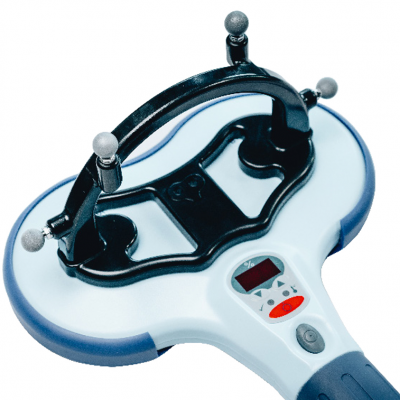
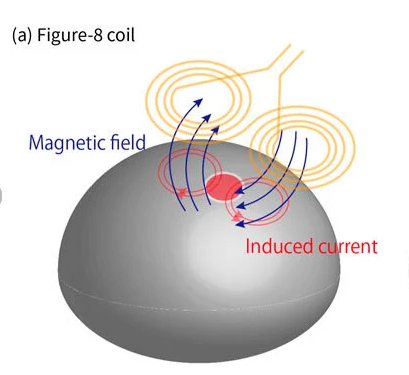
Figure-8 TMS has several advantages:
- Extensive clinical research spanning nearly two decades
- Strong evidence for treatment-resistant depression
- Broad insurance coverage
- Well-established safety profile
- Highly targeted stimulation
Because Figure-8 TMS has been studied for so long, it remains the most widely used form of TMS in the United States. However, because the magnetic field is so focused, provider experience is important to successfully hit the treatment target.
What Is Deep TMS?
Deep TMS uses a different coil known as an H-coil. Rather than focusing stimulation on a relatively small region of the cortex like figure-8 coils, Deep TMS stimulates a broader volume of brain tissue and engages larger neural networks.
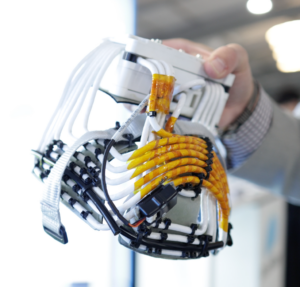
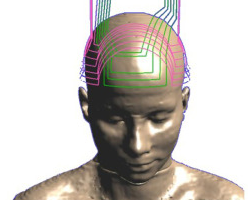
Both versions of TMS have substantial evidence supporting their effectiveness. Advocates of Deep TMS might argue that the broader, the better because of stimulating more brain networks. However, no consensus exists that Deep TMS is universally more effective than standard Figure-8 TMS for depression, or vice versa.
Are There Different Side Effects with Standard TMS vs. Deep TMS ?
The most common side effects of TMS for depression include:
- Headache
- Facial muscle twitching during treatment
- Temporary treatment-site discomfort (scalp)
Lastly, some patients report that Deep TMS feels more uncomfortable because the H-coil stimulates a larger area of the scalp. When patients are appropriately screened and treatment is performed according to established safety guidelines, outcomes with either machine can be good.
Of note, there are studies that show Deep TMS has a higher incidence of seizure. With seizure being the most serious potential complication of any TMS treatment, it is worth mentioning here. Fortunately, seizures are rare across all FDA-cleared TMS systems. The increased risk could be due to the broader magnetic field. Advocates of Deep TMS may consider the increased risk as a tradeoff. Critics may say a broader magnetic field adds no benefit, just more risk.
Does Deep TMS Work Better Than Standard TMS?
This is one of the most common questions patients ask. The honest answer is that current evidence does not clearly establish one technology as universally superior for all patients. What we do know is that both approaches can produce meaningful improvements in depression symptoms, including in patients who have not responded adequately to medication.
Because depression is a highly individualized condition, one patient may respond exceptionally well to one protocol, while another patient may respond better to a different approach. To get best results, choose a provider that can develop a treatment plan specific for each patient.
What Matters Most When Choosing a TMS Provider?
Patients often focus heavily on the machine being used, but other factors may be equally, or more important. When evaluating a TMS clinic, consider:
- Physician involvement in treatment planning
- The ability to tailor treatment plans to individual patients
- Proximity to the TMS office (if standard protocol)
- Experience treating treatment-resistant depression
- Cost (insurance vs. cash pay)
- Quality of patient monitoring
- Insurance expertise
- Treatment protocol customization
- Overall patient experience
A well-run practice using standard Figure-8 or Deep TMS will achieve better outcomes than a poorly managed practice using the newest technology.
What is Theta Burst TMS
Theta Burst Stimulation is not a different machine, but rather a different method of delivering magnetic pulses. In other words, figure 8 coils and Deep TMS can deliver magnetic pulses in the form of theta burst. The frequency for theta burst pulses is 50 pulses per second. The frequency for standard pulses is 10 pulses per second. There is also a protocol that sends pulses at 1 Hz (1 pulse per second). Traditional TMS sessions often last 18–40 minutes. Theta Burst protocols can reduce treatment time dramatically, sometimes to less than five minutes per session.
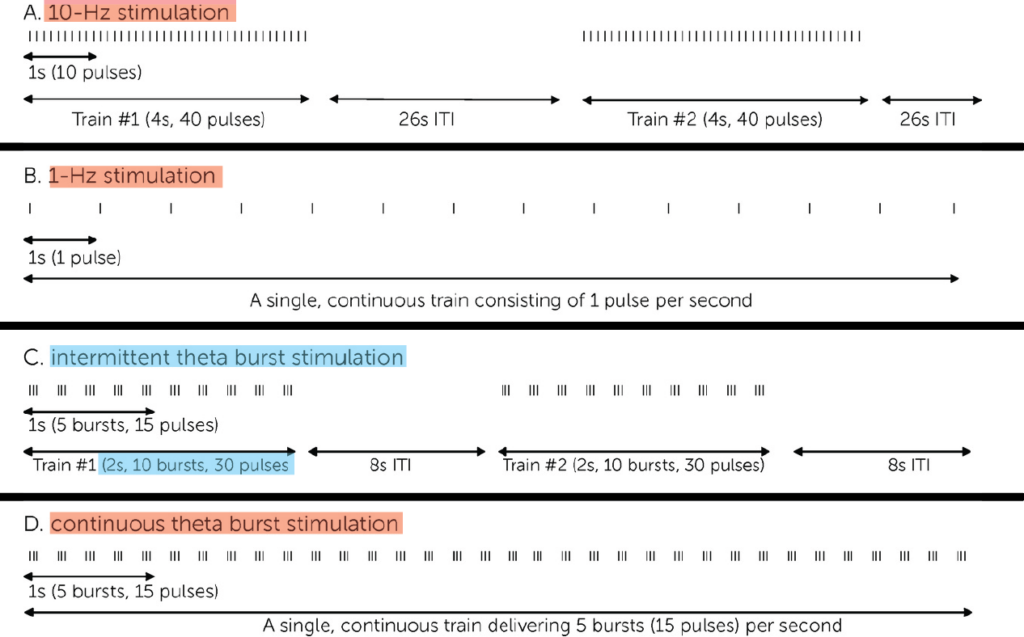
The major advantage of Theta Burst is convenience. Patients can spend less time in the clinic while receiving treatment that has demonstrated effectiveness comparable to conventional TMS protocols in many studies.
Today, many TMS centers have adopted Theta Burst as a first-line treatment approach because of its efficiency and patient convenience.
What About Accelerated TMS?
Accelerated TMS refers to treatment schedules that deliver multiple TMS sessions per day over several consecutive days.
Accelerated protocols have produced impressive results in some clinical trials, generating significant excitement within psychiatry. However, these protocols:
- remain less widely available
- often require substantial time commitments throughout the day
- may/may not require an MRI
- may not be covered by insurance.
While accelerated protocols represent an exciting area of research, conventional TMS (1 treatment per day) remains the standard treatment pathway for most patients.
The Bottom Line
Deep TMS, standard Figure-8 TMS, Theta Burst Stimulation, and accelerated TMS protocols all represent legitimate approaches to neuromodulation therapy.
Each has strengths and limitations, and no single technology has been proven superior for every patient. The good news is that modern TMS treatment—regardless of the specific platform—offers a safe, evidence-based option for patients struggling with depression who have not found sufficient relief from medication alone
The most important goal is not finding the “best machine.” It is finding an experienced treatment team that can determine which approach is most appropriate for your specific symptoms, treatment history, and goals.